
Trump's Venezuelan coup that no one dares to condemn
Barely a few days into 2026, Trump orders the abduction of Nicolás Maduro. We live in a less safe world than we did in 2025, courtesy of the so called Western bastions of ‘international law’ and ‘human rights’.
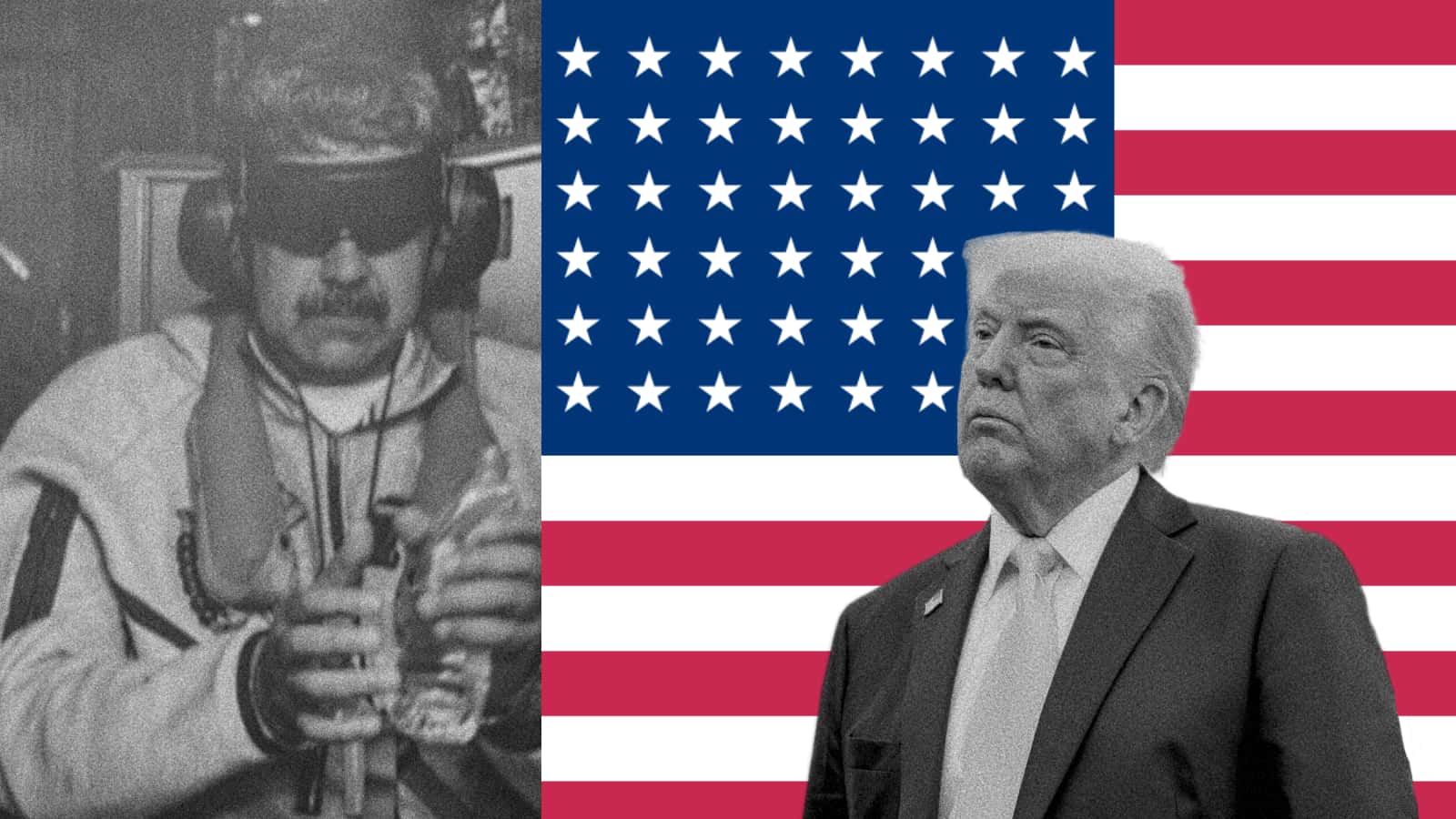
2026 didn’t waste any time. We expected the worst, and barely three days in, the year delivered.
Donald Trump has claimed that American forces seized Venezuelan President Nicolás Maduro and his wife, Cilia Flores, spiriting them out of South America during a pre-dawn raid on Caracas. After witnesses in Venezuela reported a series of explosions, the US president described the abduction to the New York Times as “a brilliant operation,” praising the planning and the troops involved. In a subsequent press conference on Saturday, he declared with bluntness: “We are going to run the country.”
The overnight strikes on Venezuela, and the extraction of its elected leader, have driven a fresh truck through international law. To retrofit legality onto naked aggression, the United States has filed a fresh indictment in federal court in New York against Maduro and his wife. The charges allege that, for more than 25 years, the Venezuelan leadership corrupted state institutions to import tons of cocaine into the United States.
The indictment claims: “NICOLAS MADURO MOROS… is at the forefront of that corruption and has partnered with his co-conspirators to use his illegally obtained authority… to transport thousands of tons of cocaine to the United States.” It further asserts that Maduro “sits atop a corrupt, illegitimate government” that has leveraged power to protect illegal activity.
As legal justifications go, this one is thin enough to see through.
Adding to the theatre, US Attorney General Pamela Bondi announced via tweet that Maduro and his wife have also been indicted for “possession of machine guns and destructive devices.” We have become so desensitised to the mechanics of empire that we fail to register the absurdity of this: the US, a country where firearms are sold in Walmart, has kidnapped the head of a sovereign nation and the commander of its armed forces to charge him with owning weapons.
The claim that this operation is about narcotics collapses under even minimal scrutiny.
A classified report from the US National Intelligence Council, published in April, consistently indicated that there was no proof of collaboration between Tren de Aragua, a notorious organised crime gang, and senior figures in the Maduro administration, though it noted that Venezuela’s permissive conditions enabled drug gangs to thrive.
The assessment incorporated contributions from all 18 agencies within the US intelligence community, with the Federal Bureau of Investigation (FBI) being the only agency that did not concur with the conclusions.
Of course, if drug trafficking were the red line, Trump would not have pardoned Juan Orlando Hernández last month. The former Honduran president was identified as a central figure in a scheme that flooded the US with more than 400 tons of cocaine, and yet he walked free.
The reason for Venezuela’s sudden “criminality” lies elsewhere, and Trump was candid about it.
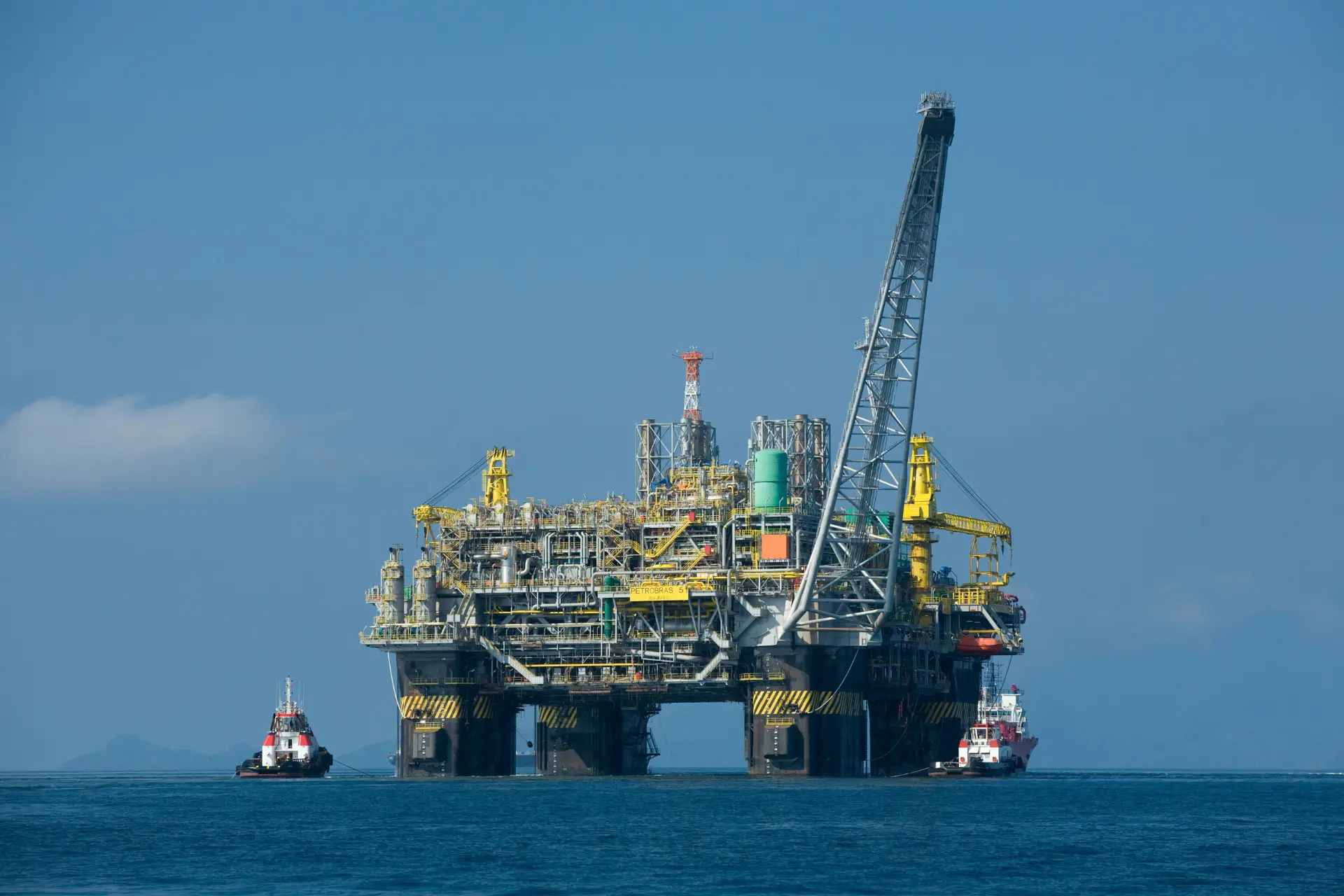
Shortly after the operation, he appeared on Fox News and dropped the pretence entirely, announcing that the United States would be “very strongly involved” in Venezuela’s oil industry. “We have the greatest oil companies in the world,” he boasted. “The biggest. The greatest. And we’re going to be very much involved in it.”
On the ground, the consequences are already unfolding. Although the Caracas government has been decapitated, senior figures remain and are urging resistance. Unconfirmed reports of civilian casualties are emerging, and if a power vacuum develops, public order could collapse into civil war.
Some Venezuelans may appear on Western television screens celebrating. We have seen this movie before. Iraqis celebrated in 2003, too — briefly — before the country descended into chaos, sectarian violence and permanent instability.
Europe’s response to this textbook act of aggression has been, predictably, pathetic. EU foreign policy chief Kaja Kallas issued a statement that managed to invoke international law without accusing anyone of breaking it. “Under all circumstances, the principles of international law and the UN Charter must be respected,” she wrote, while carefully avoiding the word invasion.
There is a reason for this cowardice. It is unreal that the EU cannot bring itself to condemn an illegal, unprovoked attack on a sovereign state after spending the past three years lecturing the world about the inviolability of borders.
By refusing to condemn this aggression, Kallas has handed Vladimir Putin a beautiful gift. If legitimacy is subjective and force is permissible, why not kidnap the Ukrainian president next?
That logic was made explicit by Britain’s prime minister. “The UK has long supported a transition of power in Venezuela,” Keir Starmer tweeted. “We regarded Maduro as an illegitimate president and we shed no tears about the end of his regime.” In the very next sentence, he went on to “reiterate” his support for international law.
What, precisely, is the point of such a statement beyond advertising spinelessness?
If the mere desire for a “transition of power” is sufficient to legitimise foreign abduction, then presumably Xi Jinping or Vladimir Putin would be within their rights to kidnap the British prime minister should they decide Britain’s leadership no longer suits them. If legitimacy is a matter of opinion, and force is an acceptable tool to resolve it, then sovereignty ceases to exist as a principle at all.
Of course, the illegality of Russia’s invasion does not depend on Zelenskyy’s democratic legitimacy, which Russia denies, nor on Ukraine’s human rights record, which Russia contests.
The UN Charter prohibits the use of force in international relations, full stop. Under international criminal law, the crime of aggression, articulated at Nuremberg and later codified in the Rome Statute, is regarded as the supreme international crime.
However, let us set Ukraine aside for a moment. Marco Rubio has made no secret of his desire for regime change in Cuba. Trump has repeatedly threatened to invade Greenland, which is Danish territory.
During this year’s fresh wave of protests in Iran, the largest since 2022, Trump warned that the United States was “locked and ready to go” and would come to Iran’s “rescue”. This followed Washington’s bombing of Iran in 2025, another act of aggression that the European political class did not dare to condemn.
China is now presumably in a stronger position should it choose to attack Taiwan.
One is left wondering what Trump would actually have to do for Europe to accuse him of an act of war. EU leaders spent months liberal-washing a US oil blockade on Venezuela, the seizure of Venezuelan tankers in international waters — literal piracy — and extrajudicial killings carried out against vessels Washington claimed were linked to “drug trafficking”, insisting that legality was merely a matter of interpretation until time simply ran out.
There is literally nothing Trump could do that would compel the EU to stand up to him.
Trump’s foreign policy is brutally simple. He believes the world is run by three imperial powers: the United States, China and Russia. Each is entitled to its share of the pie, its sphere of influence. He does not pretend to have moral superiority over Putin, Xi or Netanyahu. Unlike Obama or Biden, he doesn’t bother with the optics. He is who he is.
None of this absolves the Venezuelan government of its own abuses. Its human rights record is real and documented. But history is clear: external interventions almost always produce catastrophe. The removal of Jacobo Árbenz in Guatemala radicalised a young Che Guevara. The overthrow of Mossadegh in Iran paved the way for the 1979 revolution. Western intervention after 1917 entrenched and radicalised the Russian Revolution.
This invasion also serves a convenient domestic purpose. For an ageing president growing more petulant, irascible and incoherent the tightening embrace of military power is ominous.
The war will bury other crimes too. The Epstein files and the pedophilia network — not unrelated to the state of Israel — will now fade from view. And Maduro, an outspoken supporter of Palestine and a vocal critic of Israel’s ongoing genocide, is conveniently silenced.
In the midst of yet another US-engineered coup in Latin America, it is impossible not to think of the Palestinians, abandoned by the international community to a rogue state engineering their slow death through hunger, disease and settler violence.
The world watched the genocide take hold. Many aided it. Others looked away. They will continue looking away — until their turn comes.
2026 is off to a horrific start, thanks to European cowardice, emboldened hegemonies in Washington, Moscow and Beijing, and Israel’s ongoing assault across the Middle East.
We live in a less safe world than we did in 2025, courtesy of the Western bastions of “international law” and “human rights.”
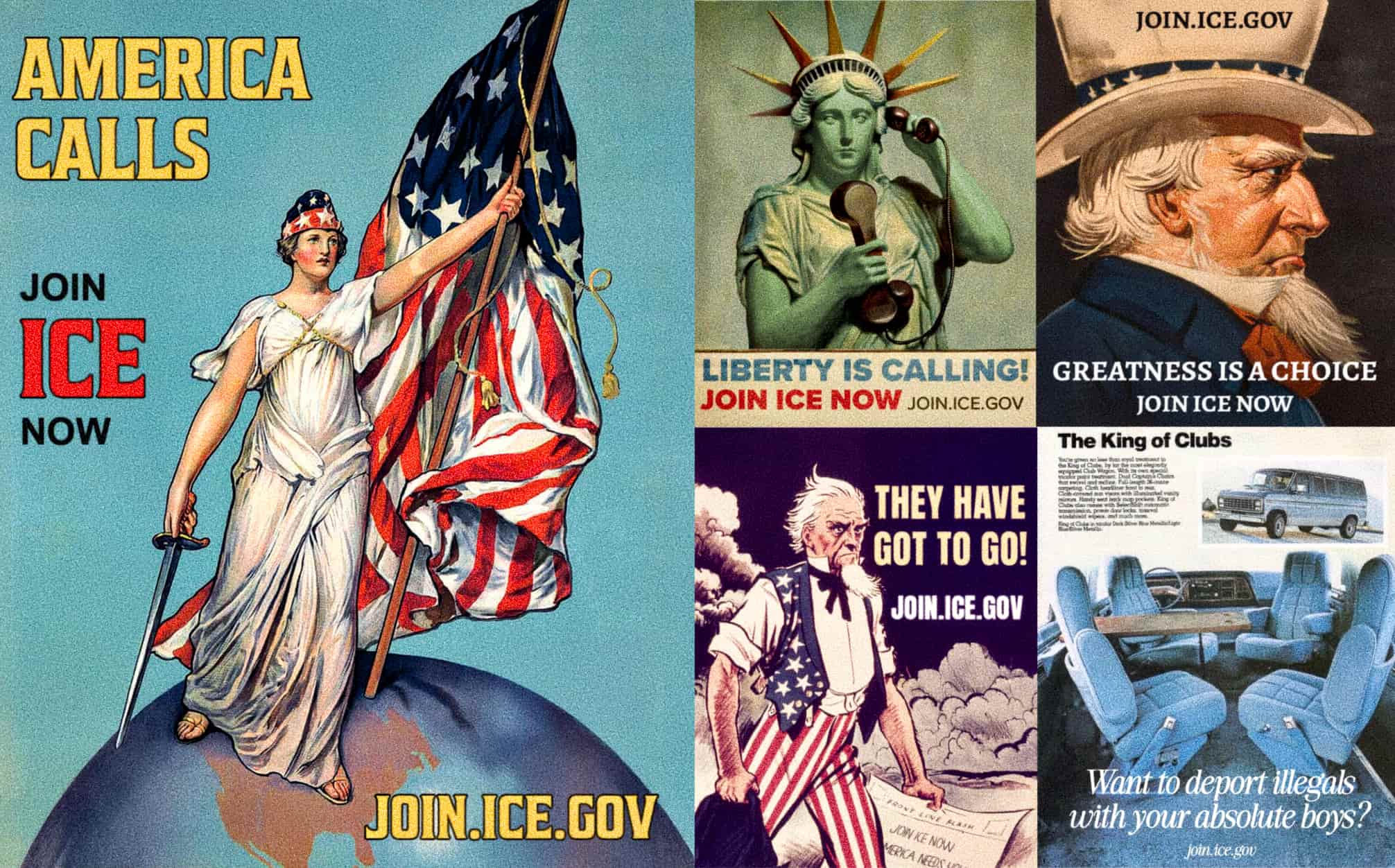
A domestic army in pictures: Inside the far-right art of ICE's recruitment ads
They called him 'Osama bin Mamdani'. New York called him mayor
'The world loses a Dick': Cheney's obituary
Art, music and leisure: American creativity in the early twentieth century
The ceasefire lie: How Trump’s plan turned genocide into a PR triumph
A trap disguised as peace: Trump's Gaza plan is an ultimatum for surrender