
El Salvador’s transformation from homicide capital to regional outlier rests on a simple arithmetic: imprison roughly 1.4% of the population and crime collapses. Whether such mathematics amounts to justice now forms the subject of a severe legal charge.
A report by international jurists argues that President Nayib Bukele’s four-year state of exception, which suspended constitutional rights and enabled mass arrests, may constitute crimes against humanity.
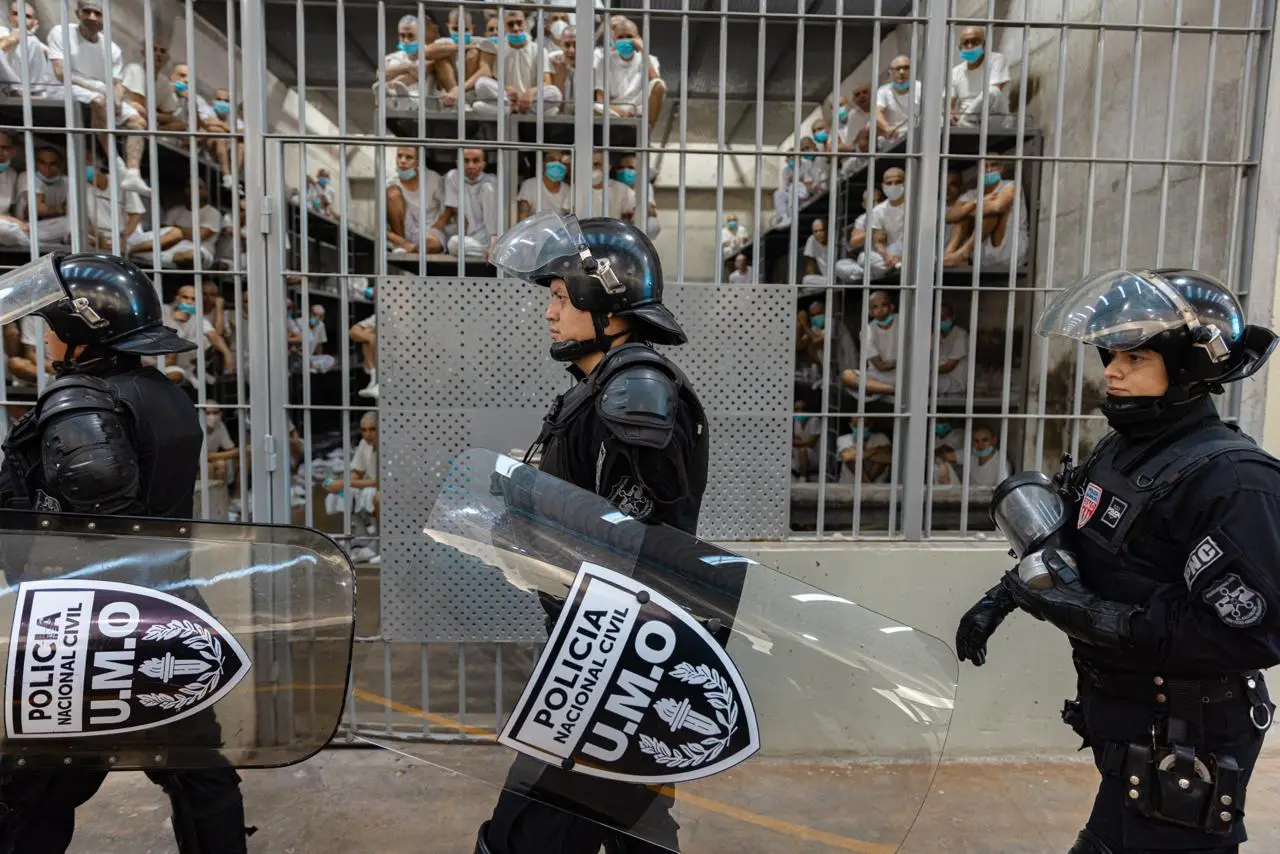
Since 2022 roughly 90,000 people have been detained in a sweeping campaign against the gangs MS-13 and Barrio 18 that once dominated Salvadoran streets. Most remain in pre-trial detention, frequently in overcrowded prisons and austere mega-facilities such as the Terrorism Confinement Centre, a purpose-built fortress intended to display the state’s regained authority.
The campaign shattered gang control and drove homicides down sharply, granting ordinary Salvadorans freedoms once denied by extortion rackets and territorial warfare.
The electorate rewarded Mr Bukele in 2024 with an unconstitutional second consecutive term. Yet the same dragnet has swept up thousands with no proven gang ties, while human-rights monitors record more than 400 deaths in custody, allegations of torture, forced disappearances and arbitrary imprisonment.
“The state must protect citizens from organised crime, but with the law, and with respect for human rights”, says Santiago Canton of the International Commission of Jurists.
The study concludes that the abuses appear neither sporadic nor accidental but the foreseeable consequence of a government policy. Its authors urge the United Nations to establish an investigative mission. Meanwhile Mr Bukele’s domestic position strengthens. Courts have been reshaped, critical judges dismissed and the electoral system remodelled in his favour.
Congress, dominated by the president’s allies, has abolished presidential term limits, clearing the path for indefinite re-election. Civil-society groups and journalists report harassment or exile; Cristosal, a prominent regional rights organisation, relocated to Guatemala after the arrest of its anti-corruption investigator, Ruth López, who remains imprisoned alongside dozens of political detainees.
None of this has dulled the appeal of the “Bukele model”. Politicians across Latin America, particularly on the ascendant far right, cite El Salvador as proof that democratic niceties obstruct the fight against organised crime.
Chile’s incoming president José Antonio Kast recently called the country “a lighthouse in a world roiled by organised crime”.