The day hate met mercy on the steps of Minneapolis City Hall
A right-wing activist arrived in Minneapolis to stoke fear of Muslims and immigrants. When his rally collapsed into chaos, it was a Black man and a transgender woman, the very people his politics target, who stepped in to protect him.
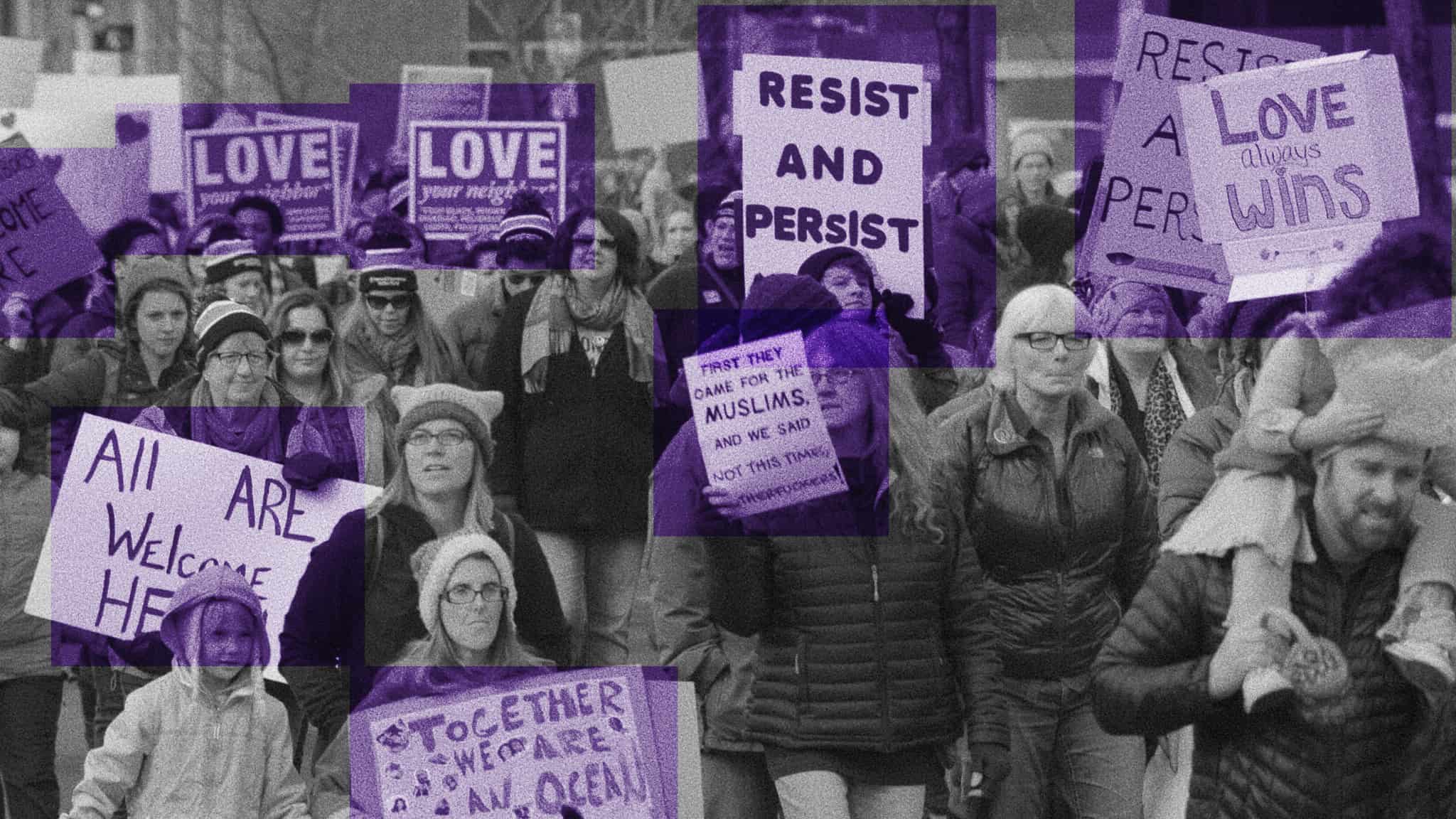
On a freezing January afternoon outside Minneapolis City Hall, Jake Lang arrived with a microphone and a message aimed squarely at Muslims and immigrants. He left the scene bloodied, frightened, and alive because of the actions of people his politics routinely target.
That is not spin. It is the documented sequence of events.
Lang, a right-wing activist and pardoned January 6 participant, had organized a protest framed as opposition to immigration enforcement critics and Muslim communities in Minnesota. The event never became what he intended. Within minutes, a far larger counter-protest formed, drowning out his speech and overwhelming his presence.
Lang was overpowered by a crowd opposing Islamophobia and racism.
The rally collapsed almost immediately.
What followed was not ideological theater. It was human improvisation.
As the crowd surged and Lang attempted to flee, a Black man stepped directly into harm’s way. Isaiah Blackwell placed himself between Lang and the people pursuing him, physically guiding him away from the densest part of the crowd. Video and photographs captured the moment clearly: Blackwell’s body shielding a man who had come to Minneapolis to inflame hatred against communities that look like Blackwell’s neighbors, friends, and family.
Blackwell later explained his actions simply. He said he did not believe anyone deserved to be hurt.
That explanation matters.
Not because it redeems Lang, but because it exposes the lie at the core of grievance politics. The people Lang warns his audience to fear behaved with restraint when it counted. The man who arrived to provoke chaos survived because others refused to become what he insists they already are.
The irony deepened moments later.
Lang, still trying to escape, ran toward a stopped car at a traffic light. Inside were two young women who had no idea who he was or what he had done. One of them, Daye Gottsche, a transgender woman, saw a bleeding man in distress and unlocked the doors.
She drove him away from the crowd.
Wild. The person who picked up @JakeLang as he was being attacked was a transgender DACA recipient.
— Cassandra MacDonald (@CassandraRules) January 18, 2026
He thought Jake had been attacked by ICE.
They say they kicked him out of the car a block away after asking which side he was on. pic.twitter.com/f4qtgQ9U2b
The protest itself was not about transgender people. But transgender people are frequently targeted, caricatured, and dehumanized within the broader political movements and online ecosystems that promote the kind of rhetoric Lang traffics in. That context is not incidental to what happened next.
Only later did she learn his identity. Only later did she understand that the person she helped had organized a rally hostile to people like her. In interviews afterward, she did not claim heroism or regret. She said she reacted to a human being in danger.
That detail is inconvenient for the story Lang and his ideological allies prefer to tell.
They rely on caricatures. On the idea that Muslims, Black Americans, immigrants, and transgender people form a threatening mass. On the suggestion that cruelty is inevitable once power shifts hands.
But on that day in Minneapolis, the only people who showed mercy were the ones Lang’s politics routinely dehumanize.
Some commentators have described Lang using labels such as “fascist,” citing his rhetoric, affiliations, and public conduct. Whether one adopts that term or not, the pattern is familiar: provoke, inflame, then recast yourself as a victim when the backlash arrives.
What Lang did not account for was decency.
He did not account for a Black man who would shield him.
He did not account for a transgender woman who would stop her car.
He did not account for the possibility that the people he vilifies might behave better than the ideology he represents.
Minneapolis did not offer him absolution. It offered him something far more destabilizing.
It denied him a villain.
And in doing so, it exposed the hollow center of fear-based politics. Hate demands loyalty. Humanity requires none.

The Nobel prize and the Price of appeasing Trump
From Roosevelt to World War II: How America became a global power
Greenland is no small price for Europe to learn the empire has no allies, only assets
Trump's Venezuelan coup that no one dares to condemn
A domestic army in pictures: Inside the far-right art of ICE's recruitment ads
They called him 'Osama bin Mamdani'. New York called him mayor