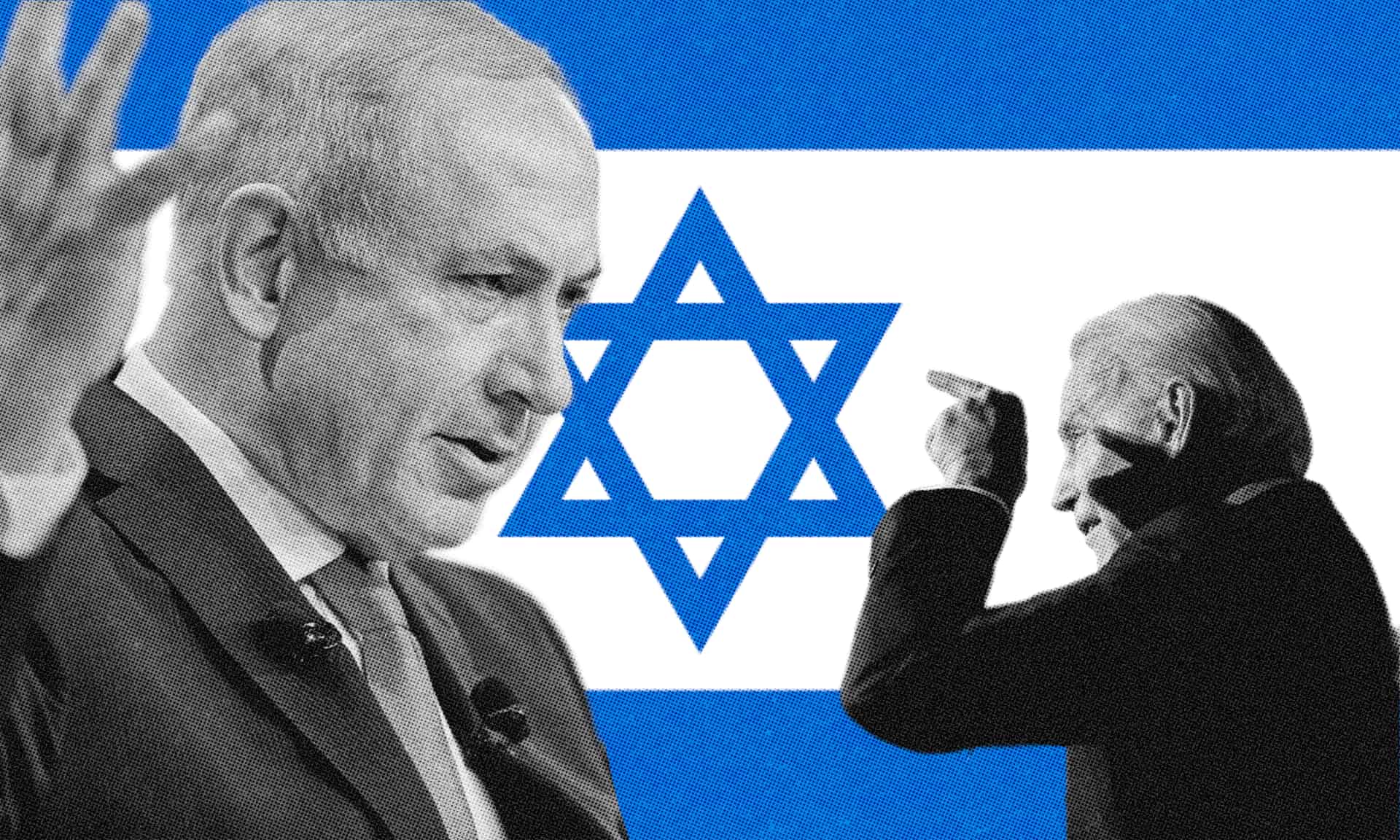

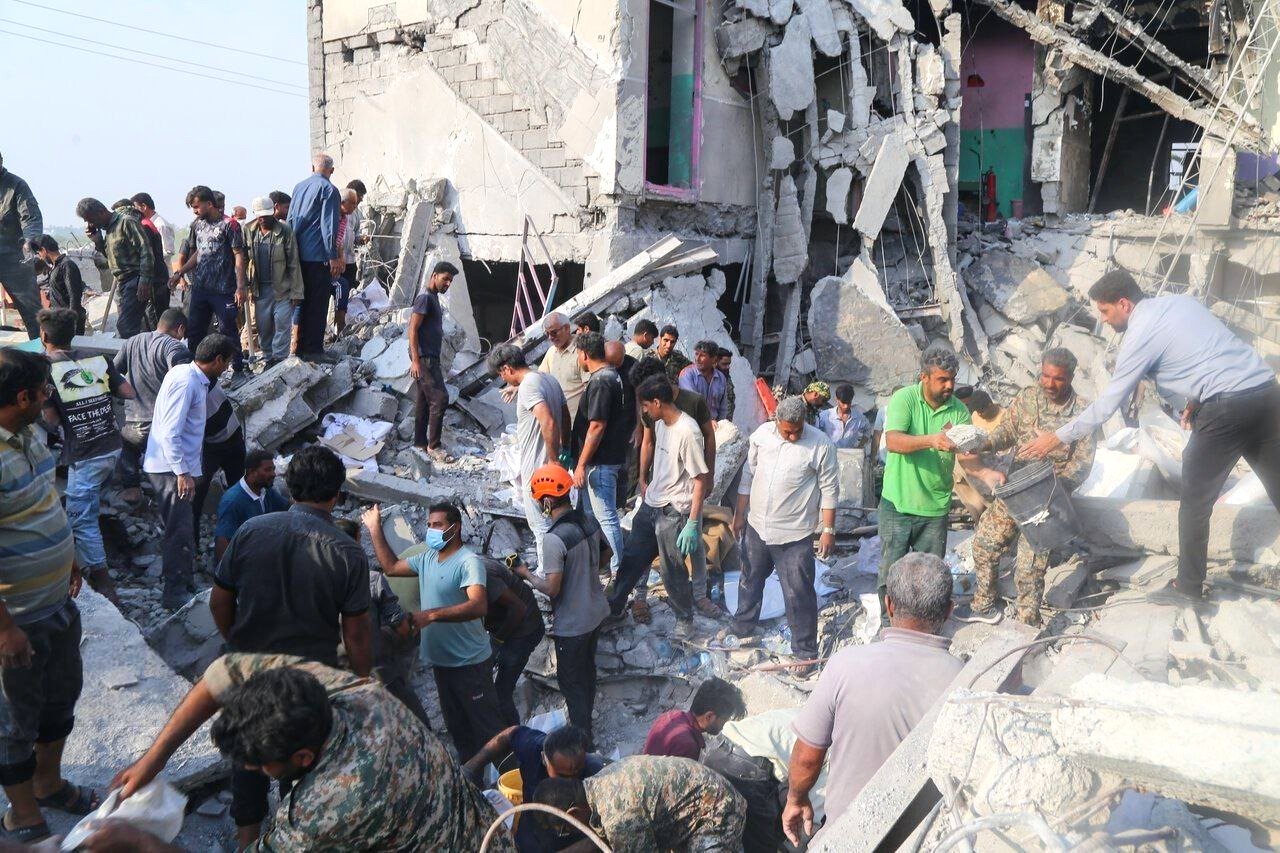
On a humid Saturday morning in Minab, the walls of Shajareh Tayyebeh girls’ elementry school were painted with trees, crayons and bright cartoon animals. By mid morning, those same walls were covered with the blood of its pupils.
Backpacks lay buried in concrete dust. A red plastic slide was twisted under debris. In videos later verified by journalists, rescuers clawed through rubble with their bare hands. One man lifted bloodstained worksheets and shouted into the chaos, “These are schoolbooks. These are children.” The screams in the background did not stop.
Between 10am and 10:45am on February 28, 2026, a missile struck the school directly, collapsing the building during morning lessons. In Iran, the school week runs from Saturday to Thursday, and classes were under way when the first US and Israeli strikes began shortly before 10am.
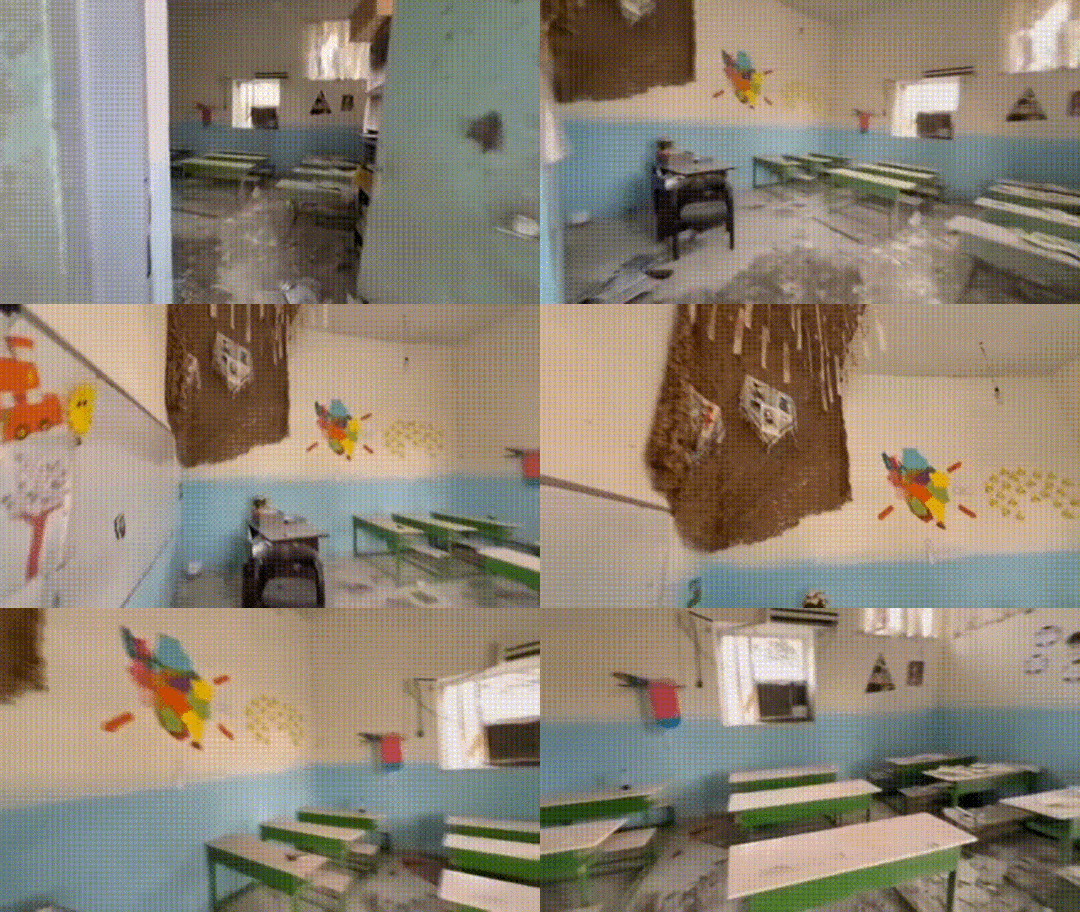
According to Iranian authorities, at least 165 people were killed and 95 injured. Most of the dead were girls between seven and 12 years old. Independent verification has been limited by severe reporting restrictions and internet blackouts, but investigations confirm that the US and Israel deliberately targeted an active primary school, adding yet another war crime to a long, bloody record.
Reporting by the Guardian reconstructed the strike through verified videos, satellite imagery and interviews. A separate digital investigation by Al Jazeera analysed more than a decade of satellite archives to understand the school’s relationship to a nearby military base. Together, the findings present a deeply troubling picture and raise questions that neither Washington nor Tel Aviv has adequately answered.
Minab lies in Hormozgan province near the Strait of Hormuz, one of the world’s most strategically sensitive waterways. Adjacent to the school is the Sayyid al Shuhada military complex, which includes facilities associated with Iran’s Islamic Revolutionary Guard Corps Navy and the Asif missile brigade. Within hours of the bombing, social media accounts sympathetic to Israel claimed that the school was part of an IRGC base and therefore a legitimate target.
Satellite imagery tells a different story. In 2013, the building that would later house Shajareh Tayyebeh school was integrated within a unified military compound. Guard towers ringed the site and a single perimeter wall enclosed all structures.
By September 2016, that configuration had changed significantly. New internal walls were constructed to separate one section from the rest of the base. Three independent gates opened directly onto a public street. Watchtowers overseeing that section were dismantled.
Images from 2018 show civilian cars lined up outside the new entrances. A children’s sports field had been installed inside the courtyard. The interior walls were painted in bright colours suitable for young students. For nearly a decade before the strike, the building had operated as an elementary school with its own entrances and clear separation from the active military zone next door.
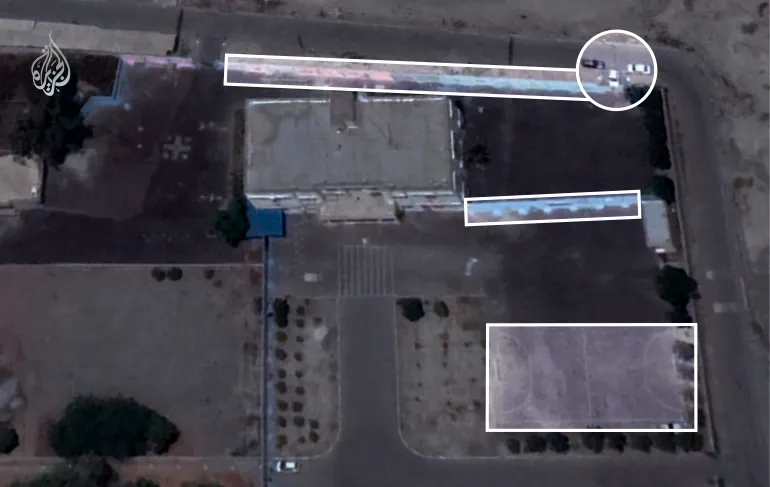
Al Jazeera identified administrative links between the school network and the IRGC Navy. Some registration notices gave priority to children of military personnel. However, international humanitarian law is explicit on this point. A school does not lose its civilian protection because of who attends it. It only loses that protection if it is being used for military purposes. There is no evidence presented by US or Israeli officials that Shajareh Tayyebeh was used for military operations.
The timing of the strike deepens the concern. The first wave of US and Israeli attacks on Iran began at approximately 9:40am local time. Iranian authorities reportedly ordered schools to close shortly afterward.
Shiva Amelirad of the Coordinating Council of Iranian Teachers’ Trade Associations told The Guardian that the warning came too late. “The time between the announcement of the school’s closure and the moment of the explosion was very short,” she said. “Families had not yet arrived to pick up their children.”
Satellite imagery reviewed by Al Jazeera shows the school building intact at 10:23am. By about 10:45am, it had been directly hit. Video clips geolocated by investigators show two distinct columns of black smoke rising at the same time.
One emerges from inside the military base. The other rises from the geographically separate site of the school. The distance between the plumes matches the separation visible on satellite maps. This strongly indicates two discrete impacts rather than collateral damage from a single strike on the base.
The clearest proof of the precision involves a third facility in the same area, the Martyr Absalan Specialised Clinic, opened in January 2025 and inaugurated by IRGC commander Hossein Salami. Like the school before it, the clinic was given a separate civilian entrance and dedicated parking to serve local residents.
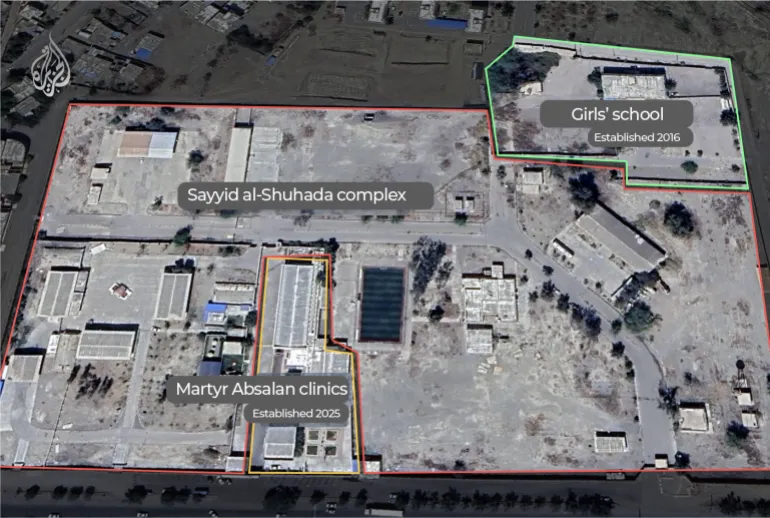
When missiles fell that morning, both the military base and the school were struck. The clinic, located between them, was left untouched.
Strike analysis suggests that the attacking forces possessed precise and updated coordinates distinguishing between the different facilities within the former unified complex. If intelligence was accurate enough to spare a newly opened clinic, it is difficult to accept that it failed to recognise an elementary school that had functioned independently for nearly ten years.
Two explanations remain. The first is grave negligence, meaning that outdated intelligence, or faulty artificial intelligence, was used in a densely populated area with predictable civilian presence. The second is more chilling, on more on brand for the Israeli regime, meaning that the school was knowingly treated as part of a military system because of its historical or administrative ties.
Either scenario raises serious legal and moral questions.
US officials said they were aware of reports of civilian harm and were looking into them. Secretary of State Marco Rubio stated that the United States would not deliberately target a school and would investigate if the strike was American.
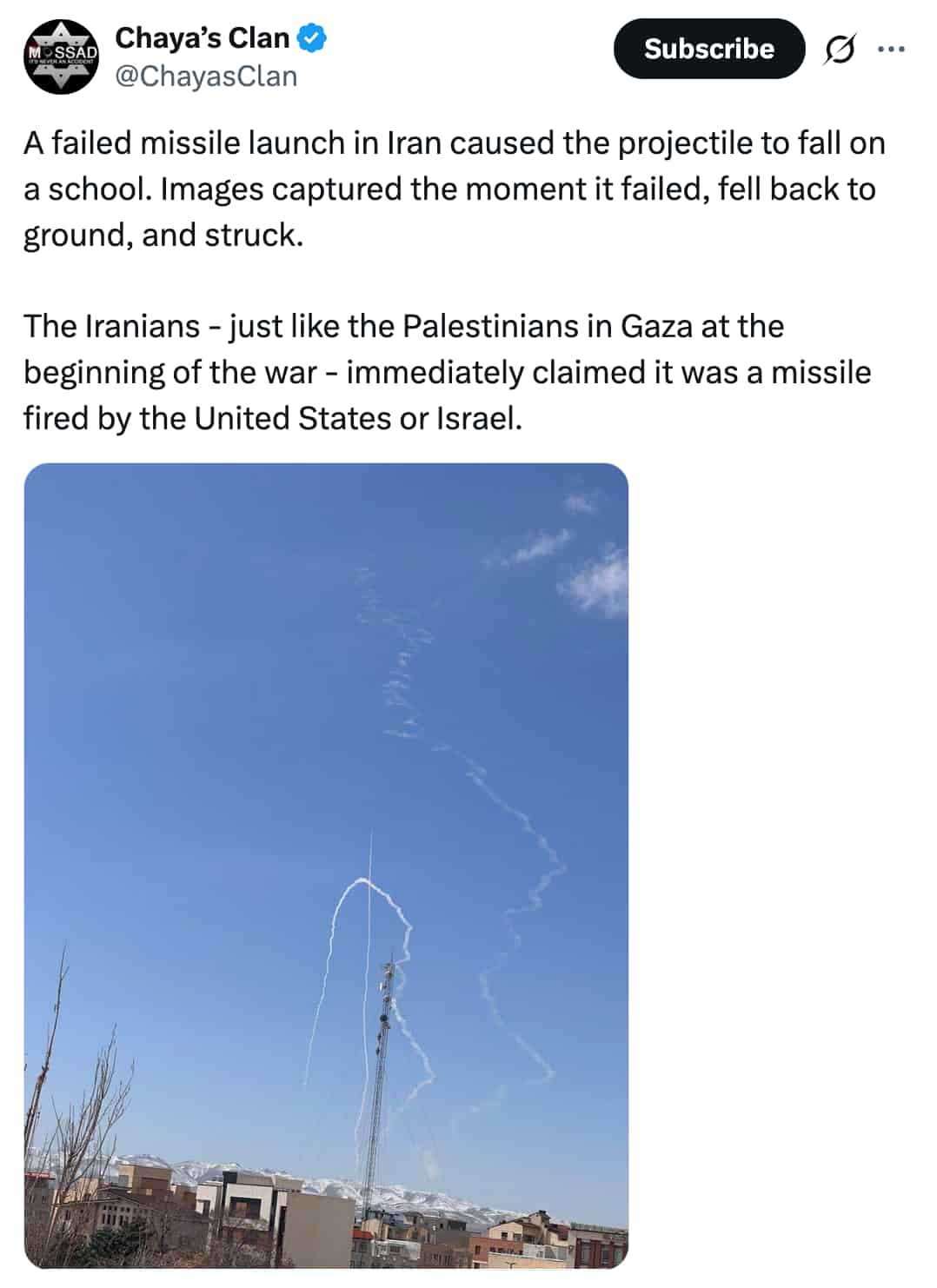
Israeli authorities issued similar denials of knowledge. At the same time, social media accounts linked to pro Israeli networks circulated claims that the destruction was caused by a misfired Iranian air defence missile.
One widely shared image used to support that claim was quickly debunked through reverse image searches and geolocation analysis. The photo had been taken roughly 1,300 kilometres away in Zanjan, a mountainous northwestern city that bears no resemblance to tropical Minab on the Gulf of Oman. The attempt to deflect responsibility unfolded within hours of the bombing, before any formal investigation had begun.
The massacre in Minab fits into a longer history of Israel targeting civilian facilities, especially children, in its warfare. In 1970, Israeli jets bombed the Bahr al Baqar elementary school in Egypt, killing 46 children. In 1991, US forces bombed the Amiriyah civilian shelter in Baghdad, killing hundreds of civilians. In 1996, Israeli shelling of a United Nations compound in Qana, Lebanon, killed more than 100 people who had sought refuge there. In 2015, a US AC 130 aircraft destroyed a Doctors Without Borders hospital in Kunduz, Afghanistan, killing 42 people after its coordinates had been shared with military authorities.
Since October 2023, hundreds of schools in Gaza—many serving as last-resort shelters for displaced families—have been damaged or destroyed during Israeli operations. Unicef alone reports that Israel has killed more than 20,000 children.
In case after case, official explanations have pointed to military necessity or intelligence failures. Independent investigations have always found inconsistencies and, at times, evidence of reckless disregard.
Unesco has described the killing of pupils in a place dedicated to learning as a grave violation of the protections afforded to schools under international humanitarian law. Human rights monitors stress that even proximity to military infrastructure does not erase a school’s civilian status. The burden rests on attacking forces to verify targets and to avoid disproportionate harm.
Minab is a modest agricultural city known for its citrus groves and date palms. It is not a place that typically features in global headlines. According to local reports cited by the Guardian, the school’s morning session usually included around 170 children. The number of dead overwhelmed the local morgue, forcing authorities to use refrigerated trucks to store bodies. Some families lost more than one daughter in a single morning.
For the parents who rushed toward the smoke that day, the debate over intelligence databases and strike coordinates offers little comfort. What remains are empty desks and unfinished homework with ash, and a question that demands a transparent and independent answer.
Was this an unforgivable intelligence failure, or was a school full of children treated as expendable in the pursuit of military objectives.
Iran’s 2003 moment: Satisfying Israel’s ambition requires permanent bloodshed
The ceasefire lie: How Trump’s plan turned genocide into a PR triumph

A trap disguised as peace: Trump's Gaza plan is an ultimatum for surrender

'The prophets of annihilation': Inside the movement that sees genocide as god's will

‘Embracing genocide’: How Iranian monarchists are championing Israel's deadly onslaught on Palestine

The end of a charade: Israel's collapse under global condemnation