Greenland is no small price for Europe to learn the empire has no allies, only assets
Any US attempt to seize Greenland would constitute a crime, yet Europe’s reliance on the American empire has left it powerless to defend even its own sovereignty.
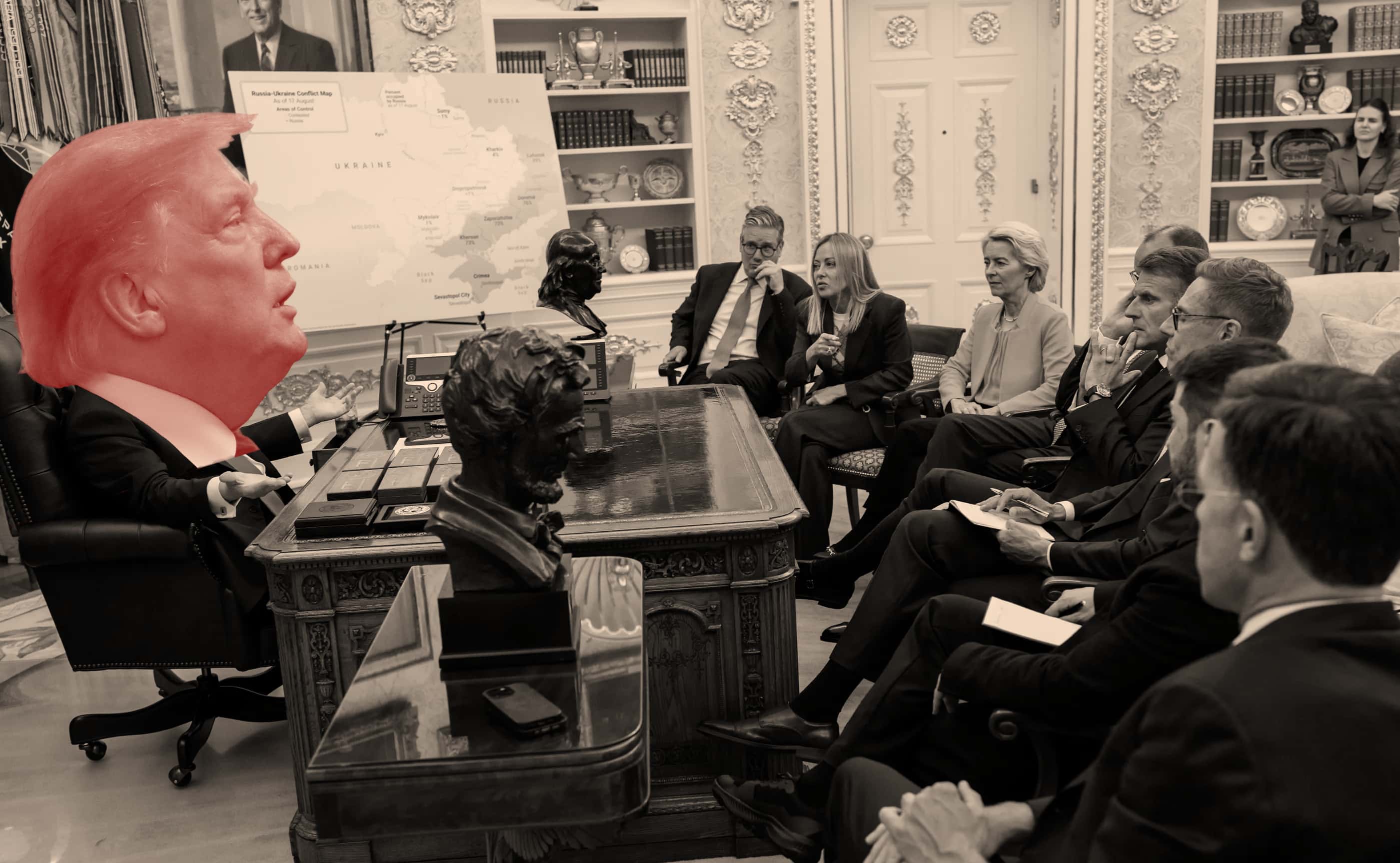
In the immediate aftermath of Donald Trump’s blatantly illegal coup attempt in Venezuela—during which the United States sought to seize the nation’s oil reserves “indefinitely” while toppling its government and kidnapping its president—a disturbing image circulated on social media.
Katie Miller, the wife of Trump’s policy architect Stephen Miller, tweeted a map of Greenland coloured entirely with the Stars and Stripes. Her caption was a single, ominous word: “Soon.”
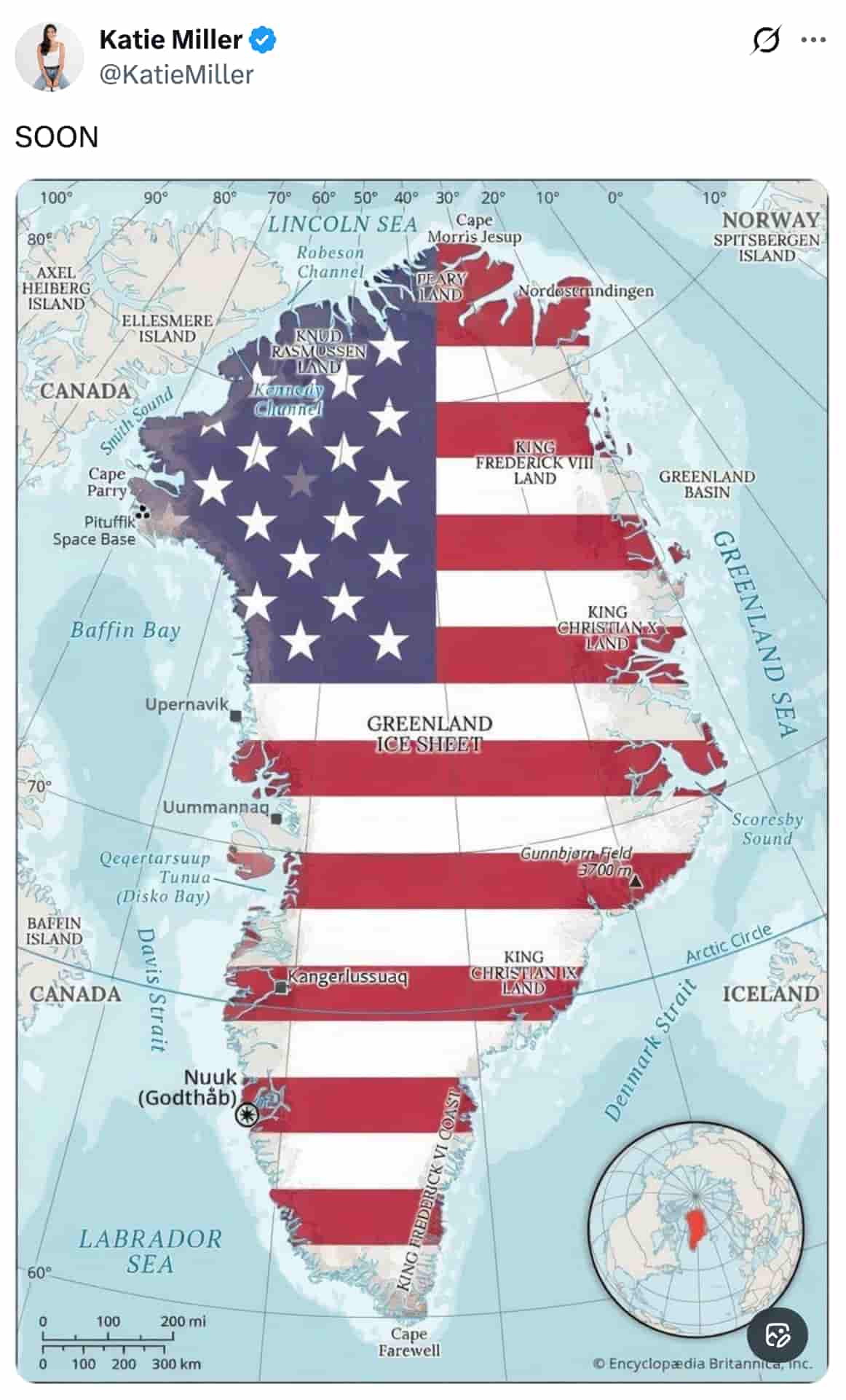
At the time, Europe’s political class responded with nervous laughter. The image was treated as a tasteless joke, a breach of diplomatic etiquette, rather than what it was: an implicit threat from a nuclear-armed state that had just violated another country’s sovereignty. The idea that Greenland, part of the Danish Kingdom and, by extension, the European political order, could be discussed as a prize seemed so grotesque that it was easier to dismiss than to confront.
That complacency has not aged well.

When asked by reporters on January 4 aboard Air Force One about his intentions in the Arctic, Trump pivoted effortlessly from his resource wars in South America to the North Atlantic. Greenland, he said, would become a priority in “about two months.” This time, he did not dress the idea up as a property transaction, as he had in 2019. Instead, he framed it as a matter of “national security.”
The United States, Trump argued, needs Greenland to secure the missile corridor between Europe and North America—and, crucially, “Denmark is not going to be able to do it.”
Greenland is part of the Danish Kingdom. Denmark is a NATO member, a “model ally,” a country that has spent decades aligning itself with American strategic priorities. Yet Trump spoke of annexation with the same casual entitlement the Kremlin uses when discussing Ukraine.
The language is always the same: security corridors, strategic depth, hostile powers. Strip away the flags and the rhetoric, and every empire speaks the same dialect. Mine.
Danish prime minister Mette Frederiksen called the idea “absurd.” Greenland’s premier labelled it “disrespectful.”
But such protests ring hollow in a world Europe itself helped to normalise. After decades of obedience to American power, European leaders now appear genuinely shocked to discover that international law does not protect those who refuse to defend it—and that loyalty does not confer immunity.
For much of the Global South, this revelation will provoke no such surprise. From Latin America to the Middle East, the lesson has long been that subservience does not shield you from empire; it merely delays your turn.
Qatar’s status as host to the region’s largest US air base did not prevent Israeli bombing in 2025. Panama’s Manuel Noriega learned that years on the CIA payroll offered no protection once he became inconvenient. From Saddam Hussein to the Shah of Iran to Ngo Dinh Diem in Vietnam, the record is littered with Washington’s former “friends” who discovered too late what friendship really meant.
What is new is not American behaviour, but Europe’s proximity to its consequences.
For decades, European leaders responded to US violence abroad with studied indifference. When Trump moved against Venezuela, European capitals did not condemn an illegal coup; they merely “monitored the situation.” They remained silent during the US war of aggression against Iran. Worse, they became active accomplices in Israel’s crimes—refusing to defend UN personnel murdered by the IDF, abandoning their own citizens kidnapped in international waters, abused and raped while attempting to deliver aid to Gaza.
They ignored, and many actively supported, the genocide in Gaza because they believed themselves members of the club. They chose access over principle, alignment over law, proximity to power over the values they endlessly invoke.
European liberalism today is universalist in language and radically selective in application.
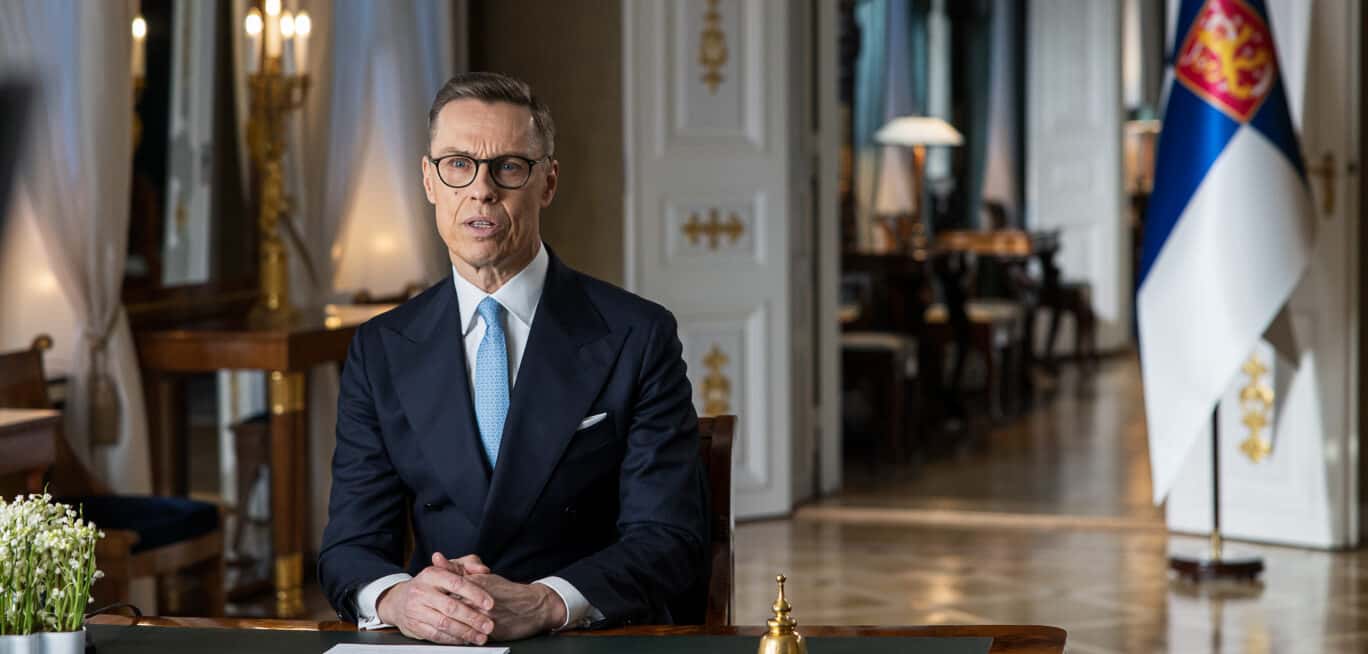
And this mindset was neatly captured in Finnish president Alexander Stubb’s New Year’s address. Known in the US largely for golfing with Trump or appearing on Bloomberg to explain what Trump “really thinks,” Stubb offered a string of aphorisms:
“It is easy to list what is wrong and to concentrate on threats. It is much harder to find solutions. Pessimism leads to inaction. Optimism to action. Realism to solutions”, the Finnish president said.
It sounds profound until one asks the obvious question: solutions to what? There is no strategy here—only temperament masquerading as policy. Optimism replaces planning. “Realism” is invoked while material realities are denied. Cheerfulness substitutes for power; slogans stand in for sovereignty.
This hollowness has defined Europe’s response to Ukraine as well. Russia’s invasion was illegal and brutal. But insisting that Ukraine can achieve outright military victory—while refusing direct military involvement and amidst waning US commitment—is not realism. A genuine realist would surely recognise the contradiction.
Trump, whatever else he is, does not suffer from that confusion. He understands power relations clearly. Ukraine is not a moral cause to him; it is Putin’s sphere. His ambitions lie elsewhere—not in confronting another nuclear-armed strongman, but in extracting value from those too weak, too dependent, or too loyal to resist.
Which brings us back to Europe’s structural vulnerability.
Despite everything, Europe remains locked into a NATO architecture that functions less as a defensive alliance than as a procurement pipeline for the American, and increasingly Israeli, military-industrial complex. As poverty rises and climate breakdown accelerates, European governments slash social spending to funnel billions into US weapons systems.
Denmark offers the most grotesque example. Even as it faces open territorial threats from Washington, it remains committed to spending $5bn on American F-35 fighter jets. Tribute, paid in advance, I guess.
Military dependence, however, is only one layer of the problem. Europe’s subordination runs far deeper—into the infrastructure of modern day-to-day life itself.
We still sneer at China’s “Great Firewall,” but Beijing grasped a basic truth of 21st-century statecraft: if you do not control your own data, networks and infrastructure, you do not truly have a country.
As Huawei CEO Ren Zhengfei put it, a nation without its own data switches is “like not having an army.”
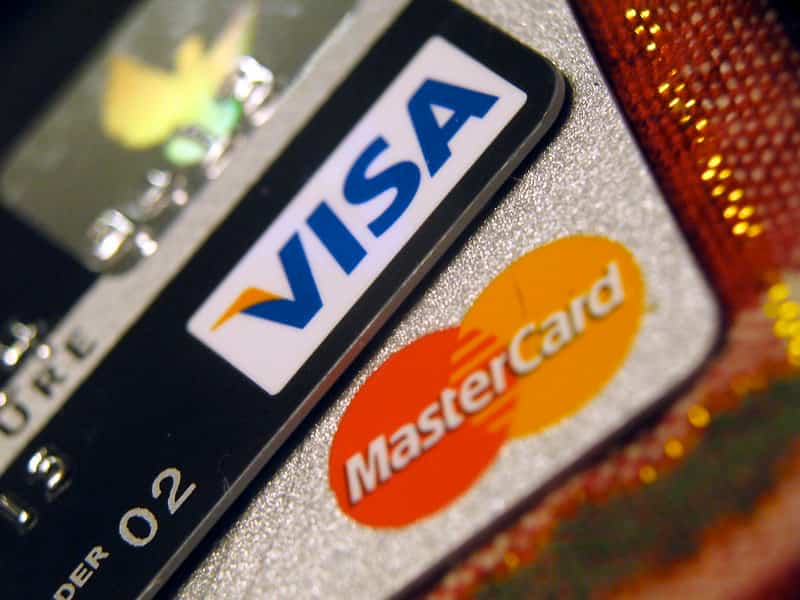
By that standard, Europe is effectively defenceless. Our intelligence services rely on Amazon Web Services. Our payment systems are monopolised by American corporations like Visa, Mastercard and Stripe. Our bureaucracies run on Microsoft software. During the pandemic, we transferred billions in public wealth to Zoom, Alphabet and Meta—entrenching dependence while calling it efficiency.
This was, and is, the result of European neoliberalism which is hollowing out Europe’s capacity to build basic necessities, from microprocessors to energy infrastructure, on the assumption that political loyalty to the United States would guarantee security.
It did not. It will not.
The European Union is 33 years old now, and the past three decades have been extraordinary for the American empire and catastrophic for European independence.
Europe’s leaders have grown supple and compliant, capable of defending a genocidal state like Israel with ferocity while proving incapable of defending their own citizens—or their own sovereignty.
To be clear: the annexation of Greenland by the United States would be a crime, an act of theft, and a direct assault on European sovereignty. It must be opposed and defended.
But if such a move were attempted, it might finally shatter the illusion under which Europe has been sleepwalking. It would expose, unmistakably, what dependency has cost—and what it still threatens to destroy.
Europe must decide what it is. A continent with principles, or a well-managed dependency living on borrowed power. Because if it continues on its current path, it will not be treated as an ally.
It will be treated as the next meal.

Trump's Venezuelan coup that no one dares to condemn
A domestic army in pictures: Inside the far-right art of ICE's recruitment ads
They called him 'Osama bin Mamdani'. New York called him mayor
'The world loses a Dick': Cheney's obituary
Art, music and leisure: American creativity in the early twentieth century
The ceasefire lie: How Trump’s plan turned genocide into a PR triumph